Meet Ace from Automat
A note from Lucas Ochoa, Founder & CEO of Automat.

Lucas Ochoa
9.30.2026
Share:
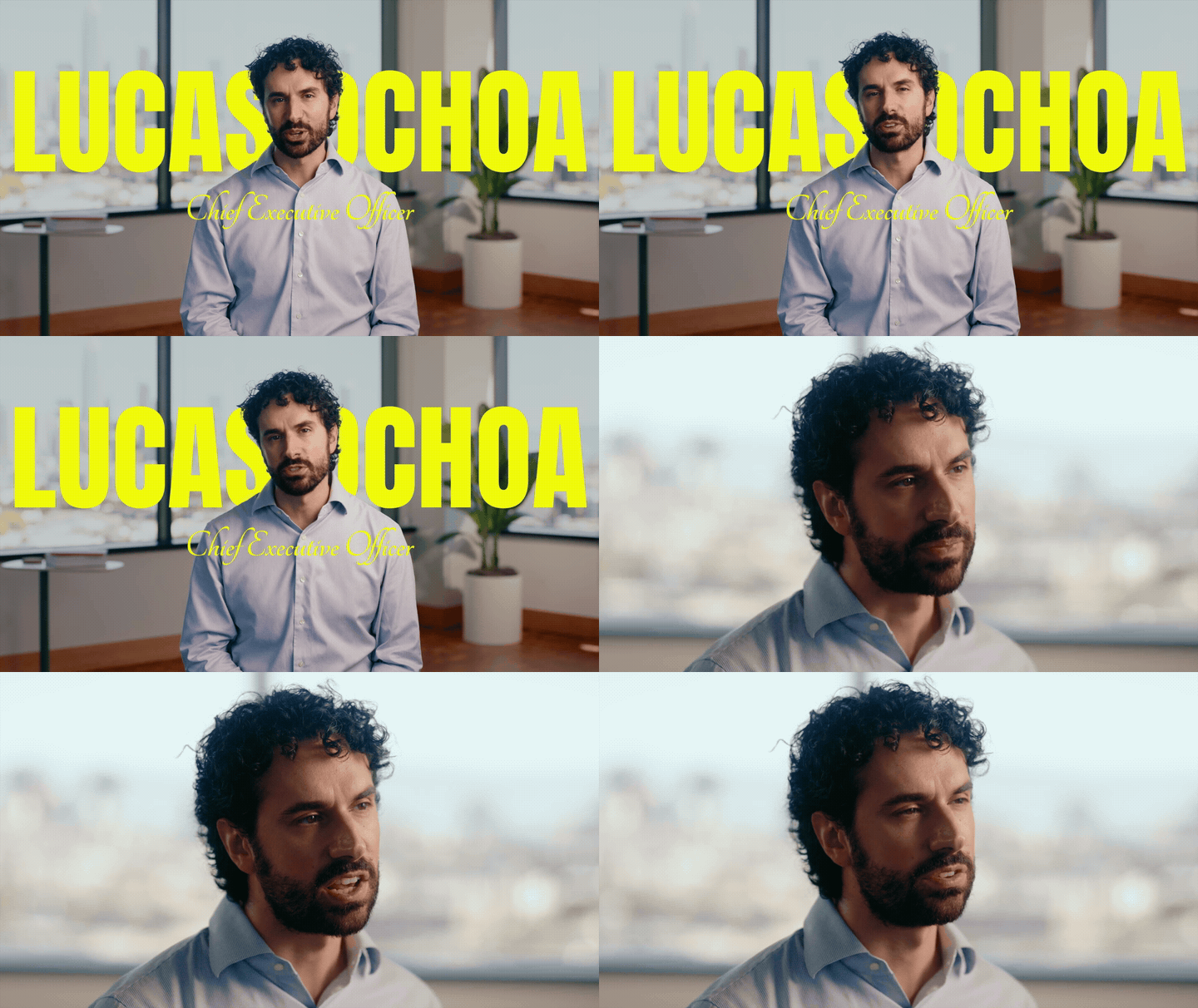
When Gautam and I started Automat three years ago, we bet that foundation models would soon be able to plan, reason, and navigate a computer on their own, and that it would fundamentally change how knowledge work gets done.
We backed that bet with Y Combinator, then raised $20M from Felicis, Khosla Ventures, Initialized Capital and others. We spent the next three years building managed automations for everyone from small mortgage lenders to Fortune Global 500 enterprises, in some of the most compliance-heavy environments there are.
I'm thrilled to announce that Ace from Automat Workforce is now generally available. It's everything those three years taught us, built into one agentic teammate.
Ace is a teammate that works inside the tools you already use. It has its own computer and its own phone, available 24/7. Some customers call it their chief of staff; others have called it Instinct or Muse, but for work. We just call it Ace from Automat.
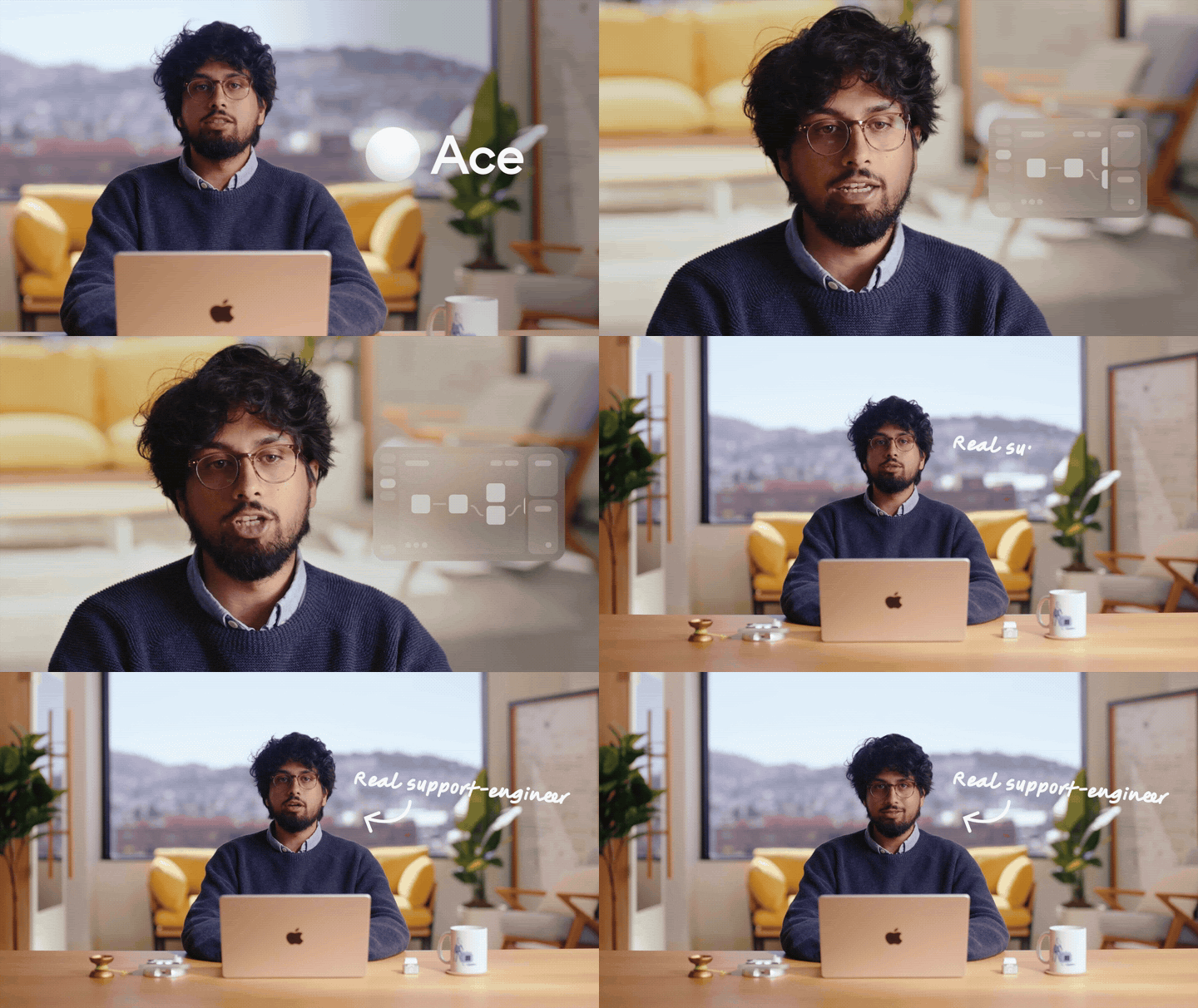
What sets Ace apart from other agents:
- Its own identity: An agent with its own persona, email, computer and phone that’s able to navigate an organization the same way a user does.
- Works in any tool: An enterprise-grade UI-automation platform (the Automat platform) that lets you build, modify, audit, and deploy deterministic and inference-based workflows, so work runs repeatedly and token-efficiently.
- A forward-deployed team: engineers who help you set it up for your specific organization, use case, or high-compliance configuration.
Ace started as something we built for ourselves. Taking Paul Graham's advice, we looked to the tools that were working for our enterprise customers at our own company. Ace's first home was Slack, where it could hold multi-turn conversations, work alongside a group, and speak up about the access it needed to get a job done.
Most interactions with Ace start with a spark of curiosity in a group chat. From there, people pull it into one-on-one conversations and shape it into the right coworker for their role. We've watched executives start Ace on inbox triage and admin work, then hand it whole functions: GTM strategy and execution, hiring ops, event planning, and the analytics behind their decisions.
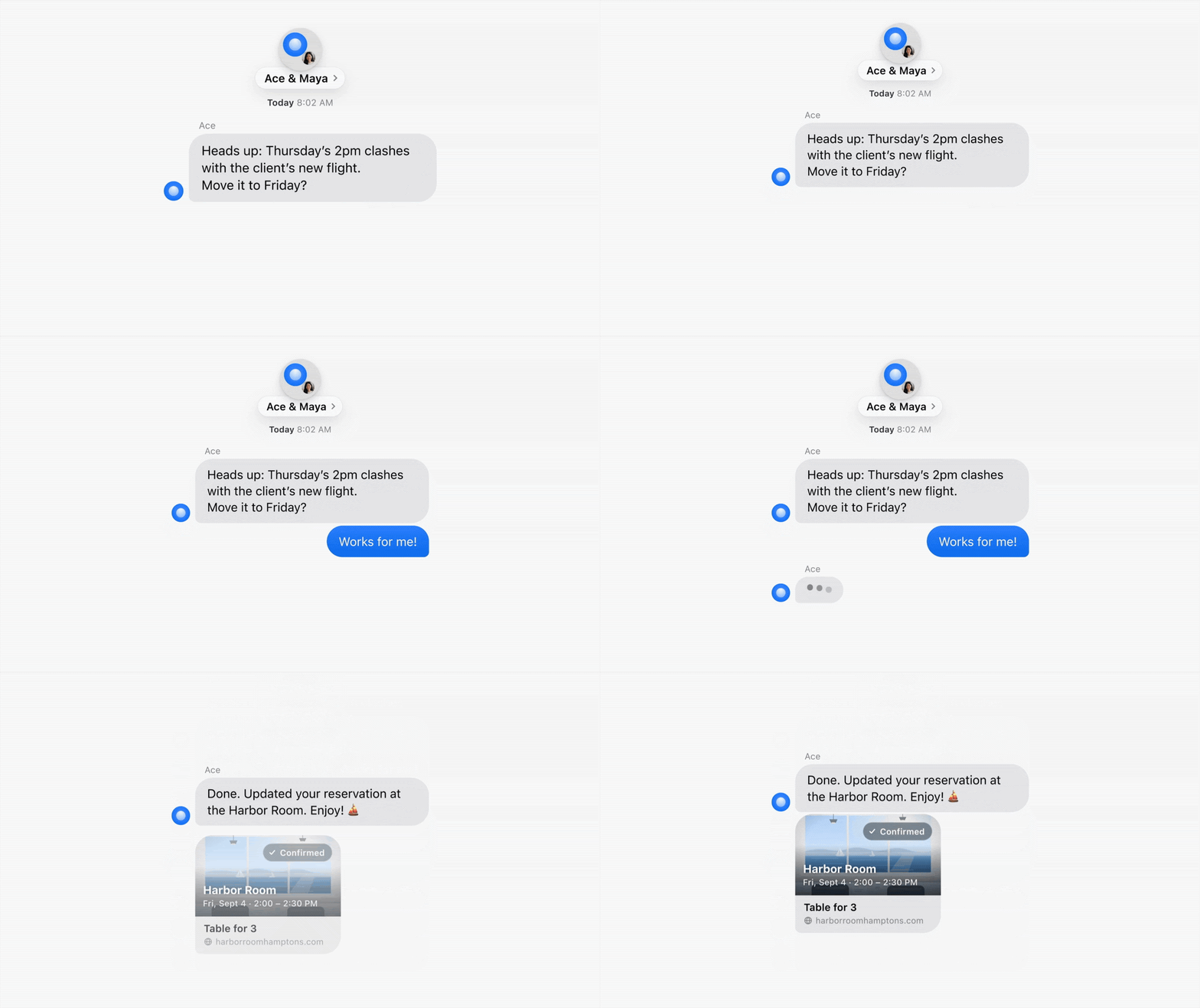
10:34 PM, a text from Ace
A few Saturdays ago, I was at my friend Emma's wedding in New York when the taptic engine in my iPhone caught my attention. It was Ace.
"Your 2:55 pm Delta flight tomorrow was cancelled. The next nonstop to SFO lands at 12:55 am. You have a few early meetings on Monday. Want me to shift them back?"
Yes. Ten minutes later, every meeting was rescheduled and every attendee notified. I never opened my inbox or my calendar, and I went back to the reception.
Ace opened its own computer, made calls, sent texts, followed up over email, and modified my calendar. We didn't set out to build a personal assistant. We set out to fix a problem we’d been staring at for years. How could AI models do reliable work across the devices we use every day? That text was when I knew we'd cracked it.
Automation Agents that know the why behind each action they take.
Nobody designs glue work. It piles up between systems that don’t talk to each other and lands on your best operators, the people you hired for their judgment.
In 2012, RPA was the answer: record the clicks, replay them. But a script doesn’t know what it’s doing. The button moves, the script breaks, a person fixes it. The industry couldn’t fix that, so it billed for it: per-bot licenses, certified developers, maintenance contracts. (More in A Builder's Philosophy and its follow-up on why automation never knew what it was doing.) One of the biggest public RPA companies even tried to invest in us. The people who know its limits best wanted a piece of what replaces it.
Building an agent that can do the work was the easy part. The hard part is trust. I trust a colleague when we share the goal and I can see their work, so Ace works in the open: every action logged, small reversible things handled on its own, anything that matters asked first. When something breaks, the fix is on us: your dedicated forward-deployed team.
Why Ace has its own persona, its own computer, and its own phone
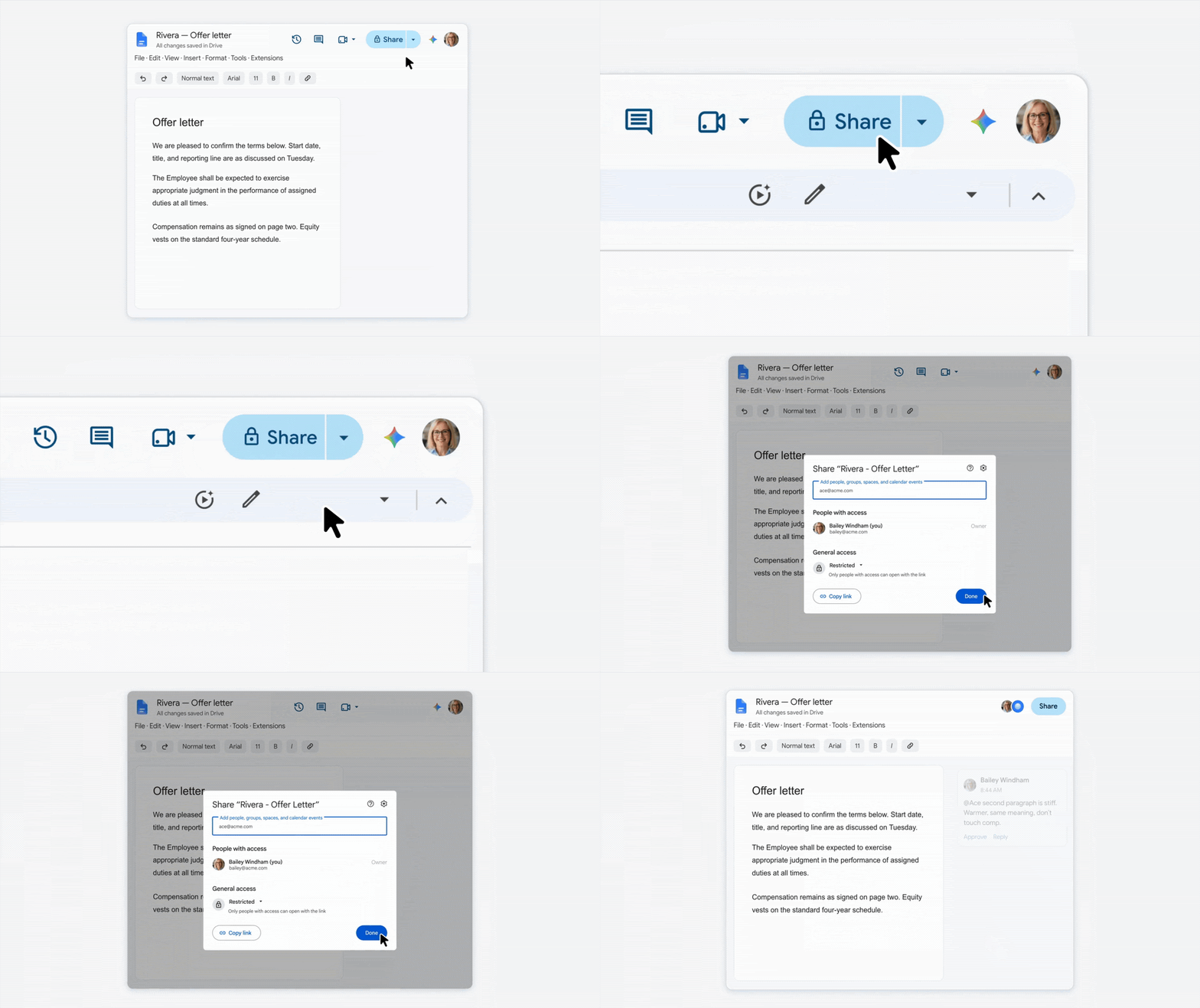
Back to that text. Ace could reach me because it has its own number. When those meetings moved, the emails came from Ace, not from me. That was deliberate, and it's the decision I'd defend hardest.
Its own identity is what makes Ace easy to work with across a whole company. Your org already knows how to bring someone on: an account, a Slack seat, the right groups and permissions, your SOPs, a manager, a first-week checklist. Ace plugs into all of it. Nobody learns a new tool or a new security model, and anyone on the team can hand it work, check on it, or pick up where it left off. Pablo, our CTO, goes deeper on this in Digital Teammates Deserve a Seat at the Company Table.
So you CC Ace and add it to channels like anyone else. That makes security boring in the best way. A phishing email in Ace's inbox isn't a command issued as you. The controls you already use for people (org units, mail quarantine, Drive sharing, Salesforce permissions) govern Ace too. It signs in from a password vault, so secrets never land in the model's context. And when you're done with it, IT disables the account. Least privilege needs a who.
It also means Ace doesn’t have to pretend to be you. It has its own voice, its own number, and a handbook for how your team works: keep Slack short, call when it’s urgent, know what done means here. The handbook covers manners. The architecture covers permissions: what it can read, what it can send, and which manager signs off on anything consequential. Every message says it came from Ace, so when my team asks it something, they know exactly who they’re talking to.
What can it actually accomplish?
What’s unique about Ace is that there’s no integration project and no engineering lift on your side. If the work happens in a browser, an inbox, a spreadsheet, or a lender portal, that is where Ace does it. Non-technical users don’t need to learn what an MCP or connector is, or file an obscure request with IT. They just share access the same way they would to another user.
We give Ace its own screen and its own hands, and the question shifts from "which systems can we connect" to "what is the job." Here are common jobs teams hand to Ace on day one:
- Calendar, inbox, and pipeline: schedule across time zones, move meetings, and keep threads from going cold.
- Work across CRM/ERP: Pull the data off an incoming document and enter it across the portals that need it, checking one screen against another as it goes.
- Reconciliation: Match records between two systems that were never built to talk, and flag the exceptions instead of guessing.
- Customer support: Answer support tickets using the customer's account history, and hand refunds or upset customers to a person.
Customers, customers, customers
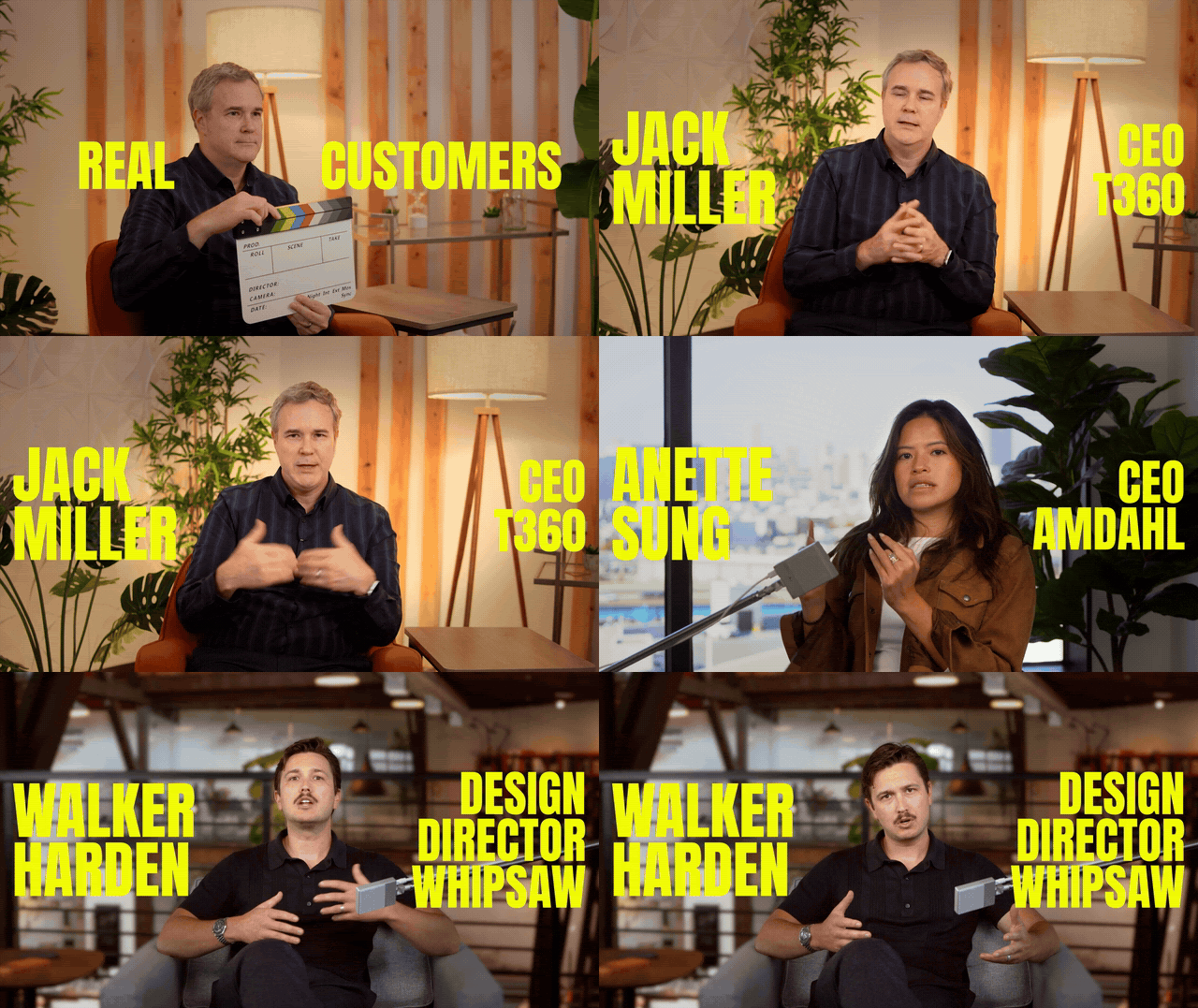
At T3 Sixty, a national real estate consultancy, Ace started with one team and spread as each person pulled in the next, giving people hours back every week. At Whipsaw, an award-winning design firm, it built a forecast across 30 live projects that drove a staffing decision, then screened roughly 200 candidates for the role that decision created. At Amdahl, a hypergrowth startup, it runs the business work that pulls founders away from building. Three different businesses, same result: the busywork moved off people and onto agents built to carry it.
10:34 PM, a conclusion
I still think about that text, and not because the flight got resolved. It's that I never had to carry the problem. Ace noticed it first, did the work, and asked me for exactly one word.
If this resonates and you’re an ambitious exec or operator, reach out. We’d love to hear from you or just meet Ace for yourself.
From the blog






One Of The Largest Public RPA Companies Tried to Invest in Us
This is the second edition in a series on where enterprise automation is headed. The first made the case for why manual work persists. This one gets specific: the root cause, the places it surfaces, and what fixing it takes.
Lucas Ochoa
8.7.2026

.png)
