Automat saves a top 5 Health Insurance Company 7 Figures by processing Medical Claims Using AI
Discover how Automat's AI simplifies document data extraction, reducing costs and increasing accuracy using Vision Transformer models and AI - RPA.

Lucas Ochoa
4.4.2024
Share:
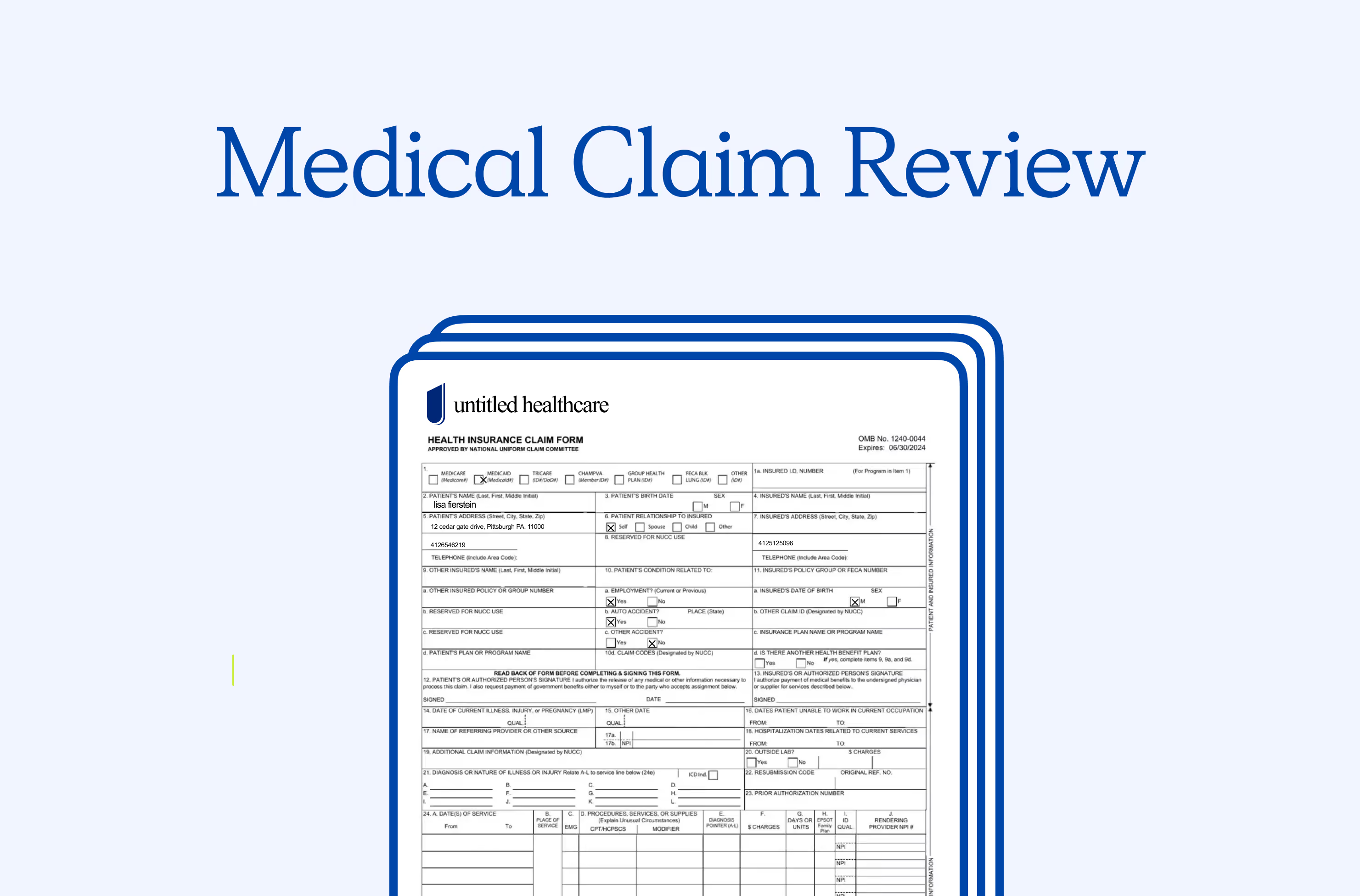
Automat, a rising leader in healthcare & insurance automation, revolutionized the industry by developing an intelligent document processing AI solution dedicated to managing medical claims and physicians' notes. This advanced intervention radically transformed the industry, assisting healthcare providers in minimizing paperwork, reducing errors, and improving overall care efficiency.
Problem Statement
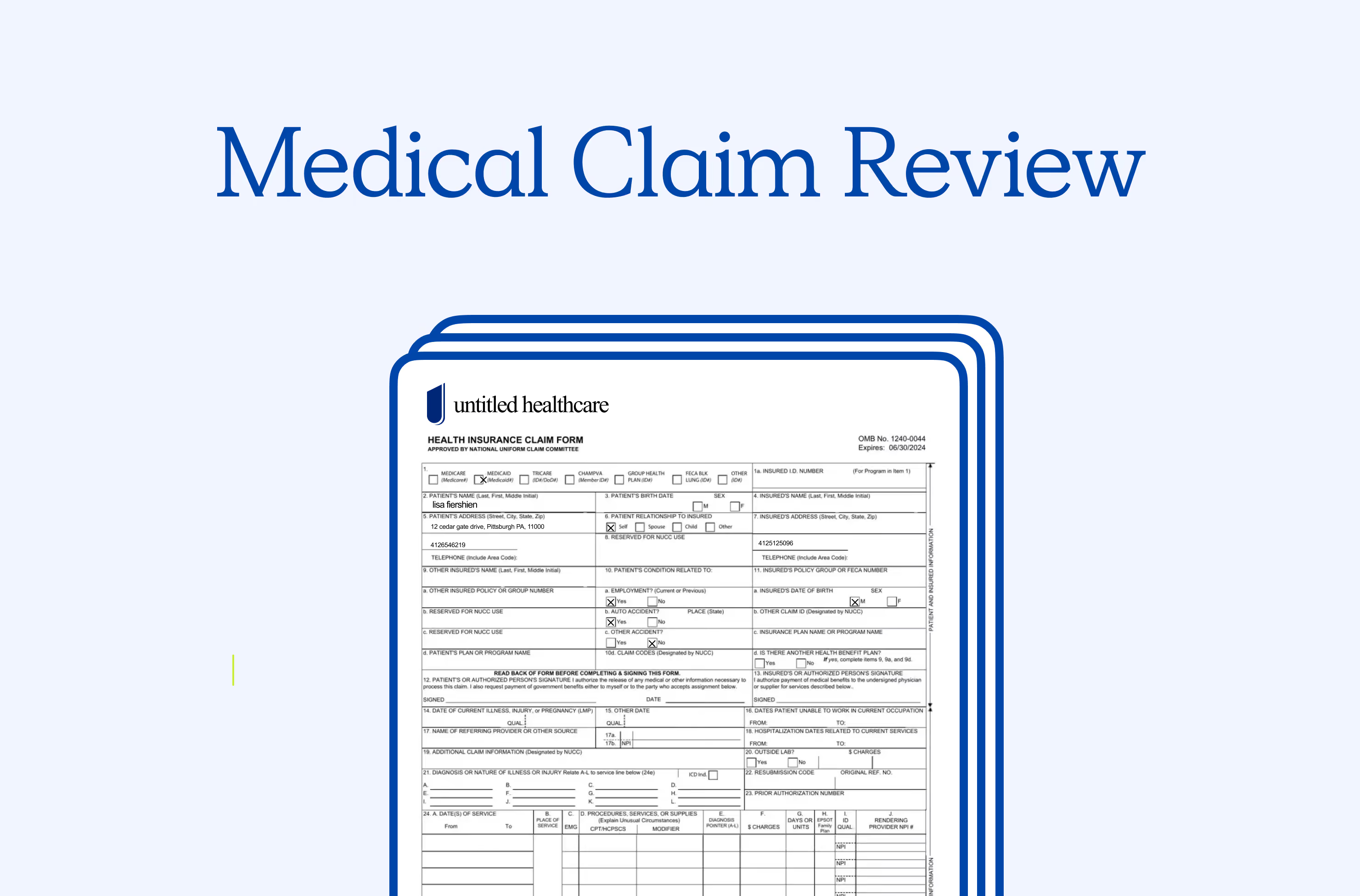
Prior to its AI implementation, the Top 5 healthcare company started talking with was manually reviewing to document processing of medical insurance claims, and decoding complex doctor's notes. The core challenges they identified included:
- Time-consuming manual document processing: Medical staff were investing excessive time in tedious paperwork, detracting from patient care. A team of ~30 in a BPO was staffed to review images and PDFs of the relevant documents manually.
- Human errors: Misinterpretations of doctors' notes and wrongly filed claims led to costly mistakes.
- Delayed reimbursements: Sluggish manual processing lengthened the reimbursement cycle, affecting healthcare providers and patients alike.
Solution - AI-Driven Document Processing
Automat decided to tackle this problem by developing an intelligent AI solution geared towards automating document processing. The multifaceted AI tool integrated several advanced technologies such as natural language processing (OCR) and Transformer models, making it capable of understanding, analyzing, and processing complex medical language even in damaged images that would fail using traditional OCR and NLP.

Key Aspects of the Solution:
Medical Claim Automation: The AI application parses and processes various formats of medical claims, extracting key information, validating it, and populating the necessary fields in claim submission forms.
Understanding and Summarizing Doctor's Notes: The AI was built with advanced OCR and NLP capabilities enabling it to analyze and understand handwritten or typed doctor's notes. It could then accurately translate this information into a standard JSON format. These transformer models at the heart of the tool enabled a level of comprehension and efficiency previously unseen in medical document processing.
Continuous Learning: The system employed AI algorithms, allowing it to continuously learn from medical professionals' feedback and become increasingly accurate over time.
Results and Outcome
The deployment of the AI solution led to a significant transformation in administrative processing:
- Increased Efficiency: The consulting firm helped the growing client company augment a 30-person team with an automated system for claims analysis. This change simplified processes and saved the company over a million dollars in salary costs.
- Faster Turnaround: Faster document and claim processing helped expedite insurance reimbursements, improving the financial cycle and patient satisfaction.
- Scalability: The solution's ability to mass process documents and claims, surpassing human processing capabilities, provided an effective tool to cope with the influx of paperwork during peak times.
- Reduced Errors: The AI solution lowered the chances of misinterpretations and mistakes, with an impressive 40% error reduction.
Conclusion
Automat's AI implementation proved groundbreaking, reshaping the landscape of document processing within the healthcare and insurance industry. The innovation has paved the way for future advancements in the industry, underlining the potential of AI in automating tasks, reducing errors, and improving service efficiency, ultimately leading to enhanced patient care.
[button] Get Started [button]

.png)